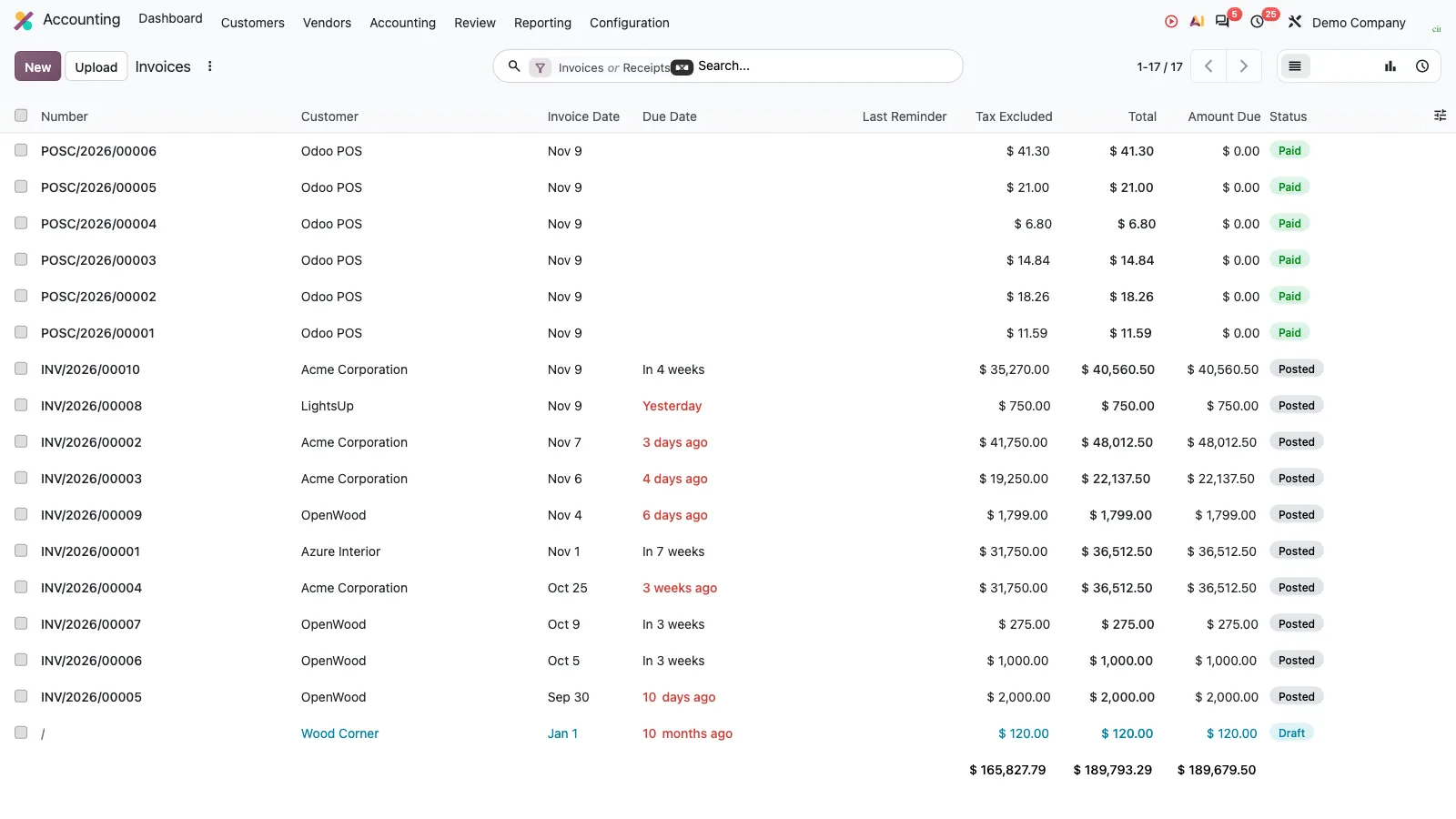
The UAE has confirmed a phased rollout of mandatory e-invoicing. From 2027, invoices between businesses will no longer be PDFs sent by e-mail – they will be structured electronic documents exchanged through accredited service providers and reported to the tax authority. If your ERP or accounting software cannot produce them, you will not be able to invoice customers on time.
This guide explains the timeline, what changes inside your ERP, and a practical checklist for finance and IT teams in Dubai, Abu Dhabi and across the UAE.
The UAE e-invoicing timeline
According to the phased implementation published in 2026:
- Phase 1 – annual revenue of AED 50 million or more: appoint an Accredited Service Provider (ASP) by 30 October 2026; e-invoicing becomes mandatory on 1 January 2027.
- Phase 2 – annual revenue below AED 50 million: appoint an ASP by 31 March 2027; mandatory from 1 July 2027.
- Phase 3 – government entities: appoint an ASP by 31 March 2027; mandatory from 1 October 2027.
The requirement applies to businesses in the UAE whether or not they are VAT registered, unless the legislation specifically excludes them, and invoices must be exchanged in a structured XML format.
What actually changes in your ERP
Most UAE companies already produce VAT-compliant tax invoices. E-invoicing adds three things on top:
- Structured data, not a layout. The invoice is generated as data fields – seller and buyer TRNs, line items, tax categories and totals – that must be complete and consistent. Missing customer TRNs or free-text tax descriptions will cause rejections.
- A connection to an ASP. Your ERP sends each invoice to your accredited service provider, which validates it, delivers it to the buyer’s provider and reports it. The ERP needs either a built-in connector or an integration.
- Status tracking. Invoices can be accepted or rejected. Your team needs to see the status in the ERP and correct rejected invoices quickly, otherwise receivables are delayed.
A readiness checklist for finance teams
- Clean the customer and supplier masters: legal names, TRNs, addresses and e-mail contacts.
- Standardise tax codes and item descriptions so every invoice line maps to a valid tax category.
- Decide whether your current software can connect to an ASP – or plan an upgrade before your phase deadline.
- Shortlist and appoint an ASP before the deadline for your revenue band.
- Test with real invoices: credit notes, foreign-currency invoices, advance payments and inter-company invoices are where problems usually appear.
- Train the accounts team on rejected invoices and corrections.
Common data problems that cause rejected e-invoices
In ERP projects we see the same issues again and again when companies test structured invoices for the first time:
- Customers without TRNs or with TRNs typed in the wrong field.
- Free-text tax lines such as “VAT 5% included” instead of a proper tax code on each line.
- Manual invoices created outside the ERP in Word or Excel and only posted later.
- Credit notes not linked to the original invoice.
- Foreign-currency invoices without the AED equivalent shown consistently.
Fixing these takes time because it involves sales, accounts and sometimes customers. Starting the data clean-up six months before your go-live date is far easier than doing it in the last few weeks.
Who should own the project?
E-invoicing touches finance, sales and IT. The most successful projects we have seen have one owner in finance (usually the financial controller), an IT contact for the integration, and a short weekly check-in with the ERP partner. Agree early who approves changes to invoice layouts, tax codes and customer masters – these decisions otherwise stall testing.
Is your software ready?
Modern ERPs such as Odoo and Microsoft Dynamics 365 Business Central can connect to service providers through standard or partner integrations. Older desktop accounting packages and heavily customised systems are the usual risk – especially where invoices are typed in Excel or Word and only recorded in the accounts later.
If you are planning an ERP implementation in Dubai or the UAE in the next 12 months, make e-invoicing part of the scope from day one rather than a separate project later.
Frequently asked questions
Does e-invoicing apply if my company is not VAT registered?
According to the published rollout, it applies to businesses in the UAE regardless of VAT registration status unless they are specifically excluded. Check your position with your tax adviser.
Can I keep sending PDF invoices?
Not for in-scope transactions once your phase goes live – the legal invoice becomes the structured electronic one exchanged through the ASP network.
How long does an ERP upgrade for e-invoicing take?
If your ERP already supports it, configuration and testing can take a few weeks. Replacing an outdated system typically takes 8–16 weeks, so start well before your phase deadline.
Adept Business Solutions helps UAE companies prepare their ERP for e-invoicing. Book a free readiness review.