
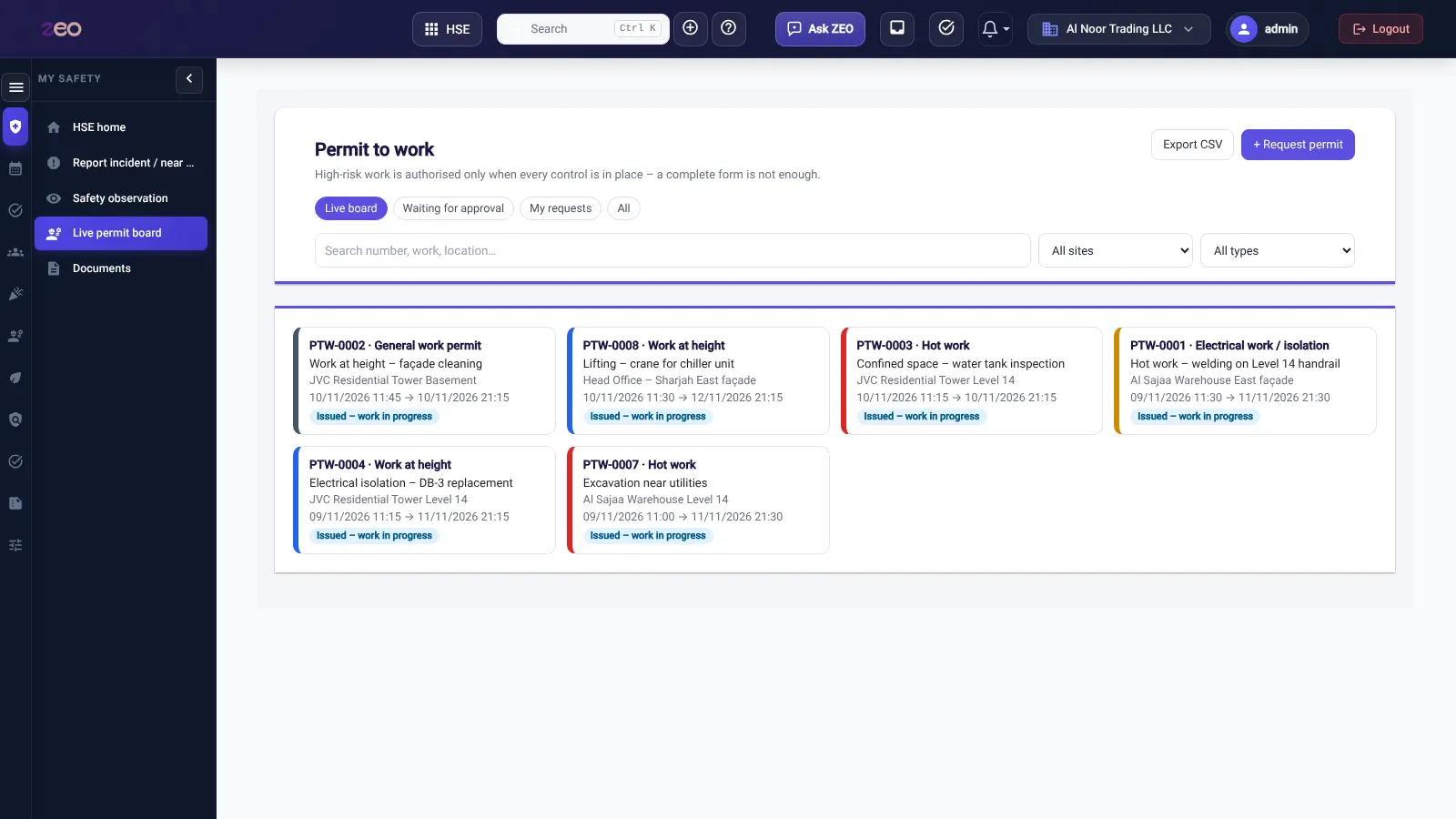
A permit to work (PTW) is the written authorisation that high-risk work can start – only after hazards are identified, controls are in place and the right people have signed. On UAE construction and maintenance sites, the main permit types are hot work, work at height, confined space entry, electrical isolation, excavation and lifting.
What a good permit contains
- The exact job, location, equipment and crew size.
- Hazards and the risk assessment or method statement it relies on.
- Precautions – gas tests for confined spaces, isolations (lock-out/tag-out), fire watch for hot work, harness checks for height.
- Validity period, with suspension and closure rules.
- Signatures of the applicant, issuer and receiver, and confirmation that the crew was briefed.
The permit lifecycle
- Request: the supervisor applies with job details, location and attachments such as the method statement.
- Review: the HSE officer checks the risk assessment and required precautions.
- Issue: the authorised issuer signs once controls such as isolation or gas testing are confirmed.
- Brief: the crew is briefed on hazards and controls before starting.
- Monitor: the permit is displayed at the work area; it can be suspended if conditions change.
- Close: the area is inspected, isolations are removed and the permit is signed off.
Common permit types on UAE sites
- Hot work: welding, cutting and grinding near combustibles – fire watch and extinguishers required.
- Work at height: scaffolds, ladders, MEWPs and roof work – harness, anchor points and rescue plan.
- Confined space: tanks, pits and ducts – gas testing, ventilation, standby person and rescue arrangements.
- Electrical isolation: lock-out/tag-out and proof of dead before work starts.
- Excavation: utility drawings, scanning for services and shoring.
- Lifting: lift plan, certified equipment and banksman.
Linking permits with the rest of HSE
A permit should not live on its own. Incidents and near misses linked to a permit show which jobs carry the most risk; inspection findings feed corrective actions; and contractor competencies decide who may receive a permit at all. In the UAE summer, heat-stress controls for outdoor work are also part of daily planning.
Why paper permits fail
Paper permits get lost, are signed after work has already started, or stay “open” long after the job ended. Supervisors cannot see which permits are live across several sites, and audits mean digging through folders.
What HSE software adds
- A live permit board per site, showing what is active right now.
- Required checklists and approvals before a permit can be issued.
- Automatic expiry and closure reminders.
- Links to incidents, inspections and corrective actions.
Our HSE safety software, ZEO HSE, includes a live permit board, gas tests and isolations, incident reporting and CAPA – built for UAE contractors and facility managers.
Frequently asked questions
Which jobs need a permit to work?
Typically hot work, work at height, confined space entry, electrical isolation, excavation near services and heavy lifting – your HSE plan defines the full list.
Who signs a permit?
Usually the applicant who will do the work, an authorised issuer who checks the precautions and the receiver responsible on site.


